
Excerpts from the book:
Ai & HUMAN ORIGIN
Philosophical interdisciplinary storytelling
Read the first chapters. Enjoy.
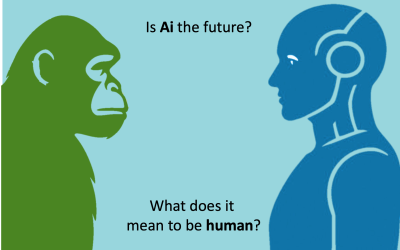
Introduction
Knowing what you know now, what would most benefit future generations? “The only thing I know is that I know nothing.” That is a remarkably profound and ancient response: the famous quote attributed to Socrates. It is a starting point for questioning the common definition of “nothing”.
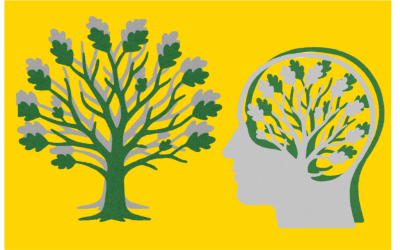
AI Machines and The Theory of Projection
There is no single agreed-upon answer to the fundamental question “What is consciousness?”. It is a central phenomenon in philosophy. Ancient Greek thinkers were consciously aware of the projection phenomenon, where humans are unconsciously projecting…

A Fictive Socratic Dialogue
Socrates had gathered his students in the shade of the symbolic Platane tree at the public square for a dialogue about city-states, in context of state of mind.
Socrates: “The only thing I know is that I know nothing. Students, you may now ask me anything.”
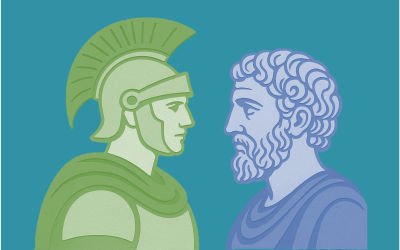
Foreign Words are Native to Their Origin
“It’s all Greek”: Language models and cognitive maps are foundational concepts in machine learning, and in the broader scientific field of AI machines. The English terms artificial, machine, philosophy and science are all derived through Latin, from Greek. There is a contradiction in that …

The Human Being Became Only Human
In the phenomenon of humans projecting their own shadows onto physical objects, human themselves is perceived as objects. Objectification reduce what it means to be a human being to be only human. “What does it mean to be human?”, has become a central question in discussions …

A Musing: Rethinking the Search for Life Out There
Could there be a form of life that doesn’t echo back the question “Is there life out there?”, but instead answer: “What if the question should be turned inward.” The Water Bringer of Life: The term silf was in Old English associated with an air spirit and the water stream of life.
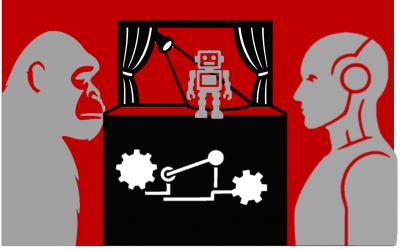
The Myth of The Machine
AI machines are envisioned as the projected desire to transcend human limitations, while the lack of human limits are projected fears of AI machine development. Why has humanity “barely survived their self’s”? In ancient Greek, the automata weren’t attractive, visionary nor futuristic as it might be…
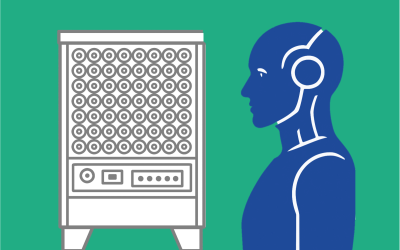
The Comparative Imitation Game and the Real “Turing Test”
Consider the possibility that the “imitation game” as it was proposed by the British computer scientist Alan Turing has been misinterpreted as a measure of machine intelligence. When instead, its deeper purpose might …

In the Art of Drawing There is Truth
The development of self-identity and self-image can be observed through children’s mental and creative development in stages of drawing: During the Decision Stage, children decide whether to continue to draw truth clearly, or abandon it.
Artificial is Natural Presence
What if the modern interpretation of the word artificial in itself is an ‘artificial’ construct? Why are there few originators? Natural skill doesn’t always conform and often quietly are discouraged or reshaped to fit the system. At the same time, humanity depends on the very originality …

In the Science of Science: Humanity is Chasing its Own Shadow
Why are consciousness separated into compartmented layers? What was the reason for separating scientific branches into compartmented fields of study? Is humanity chasing its own shadow? While doing so…
